Halifax 3 Postbaan
Halfway through the post lane a Halifax 3 crashed on April 28, 1944. the crew of the halifax consisted of 7 men. a pilot a co-pilot, navigator, bomb adjuster, navigator / gunner and then 2 gunners. All crew members died.

Halifax, LW506, 28.04.1944
Westhoek crash card number: WH-50; SGLO Loss Chart number: T-3635
Halifax III, LW506, Postbaan
Halfway the Postbaan a Halifax III crashed on April 28, 1944. The crew of the Halifax consisted of 7 men, a pilot, an on-board technician, a navigator, a bomb rider, a radio operator and also a gunner and then 2 gunners. All crew members died.
The names of the crew members:
Function Rank Name Mil. Rnr. Air Force Cemetery Grave
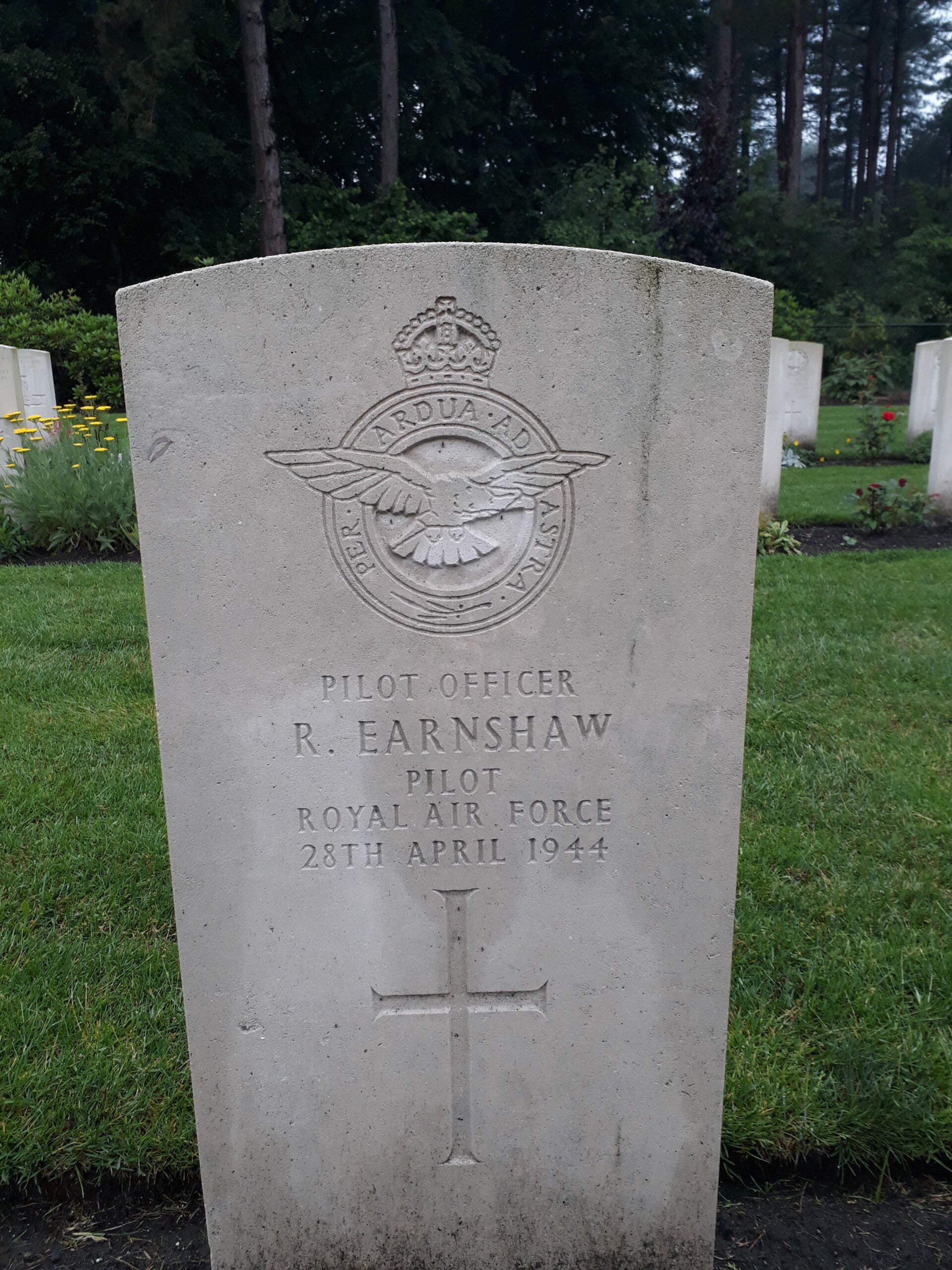
Pilot P / O R. Earnshaw 172946 RAF Bergen op Zoom 13 C 7-10
Flight
Engineer Sgt CA Hensey 1605140 RAF Bergen op Zoom 13 C 7-10
Navigator Sgt RJ Sampson 1515480 RAF Bergen op Zoom 13 C 7-10
Bomb
Aimer P / O J.Ö. Riordan 176158 RAF Bergen op Zoom 13 C - 12
Wireless
Operator F / Sgt W. Mabon 1496442 RAF Bergen op Zoom 13 C 7-10
AirGunner Sgt WA Pullen 924992 RAF Bergen op Zoom 13 C 7-10
Air
Gunner F / Sgt JA Murphy 427394 RAAF Bergen op Zoom 13 C 7-10




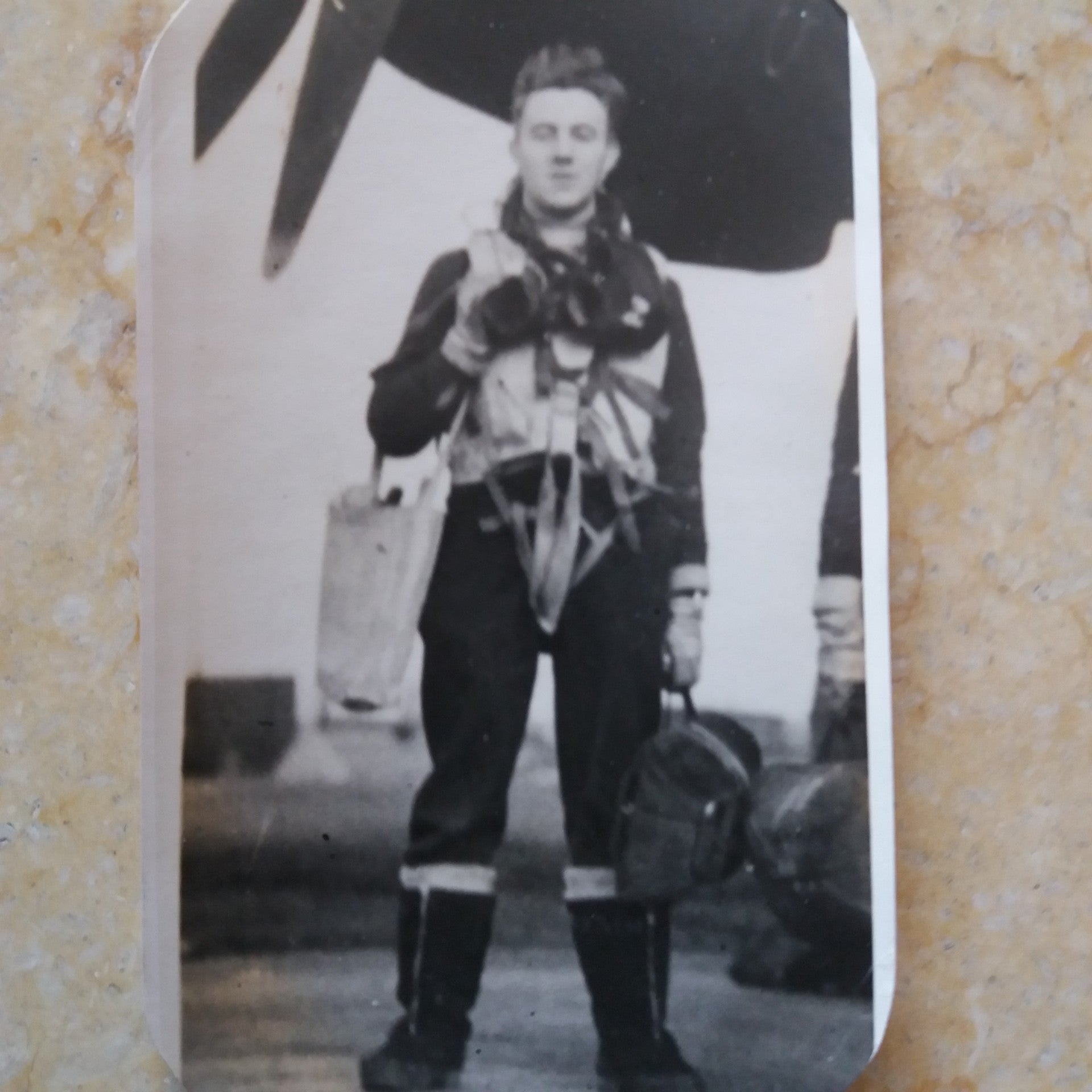

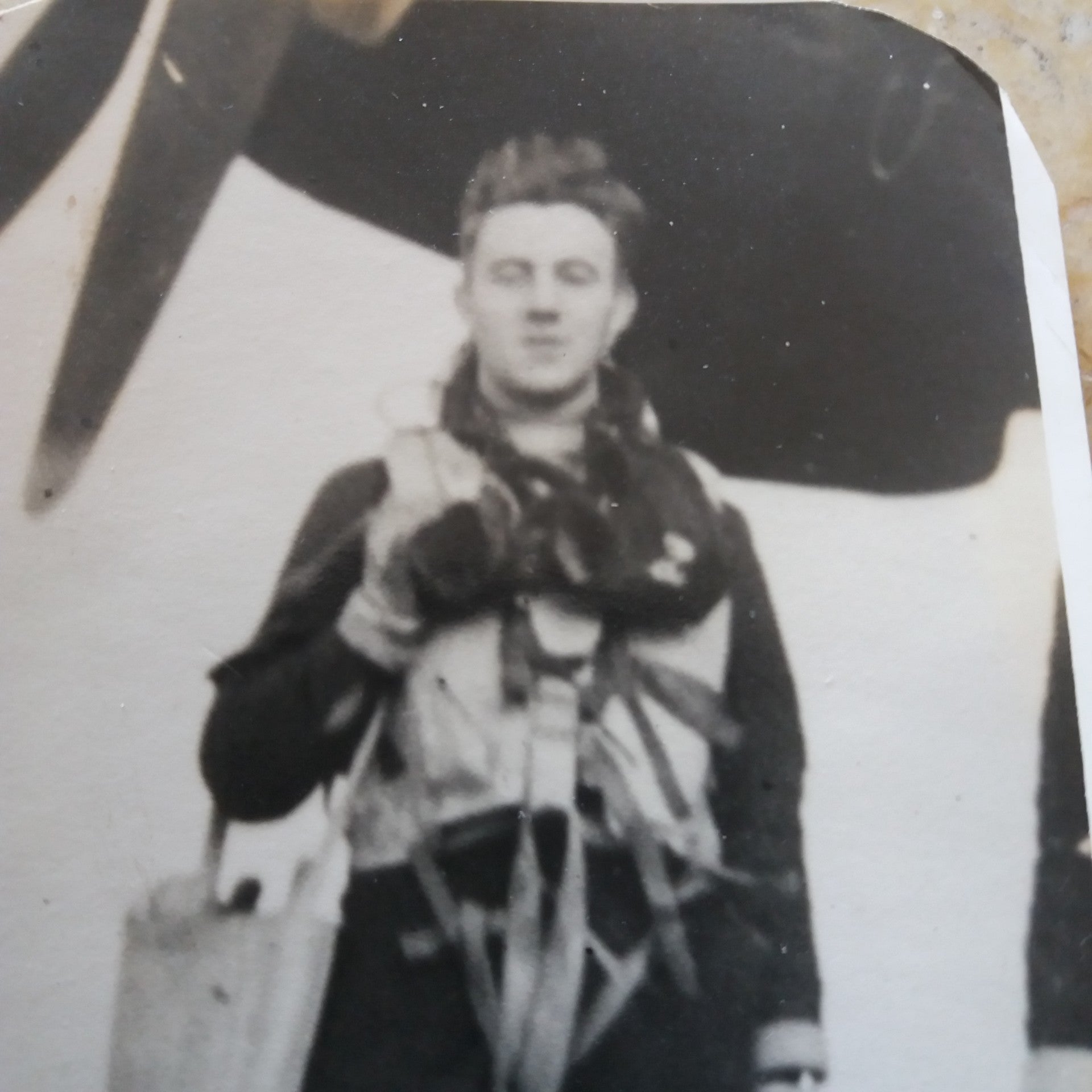

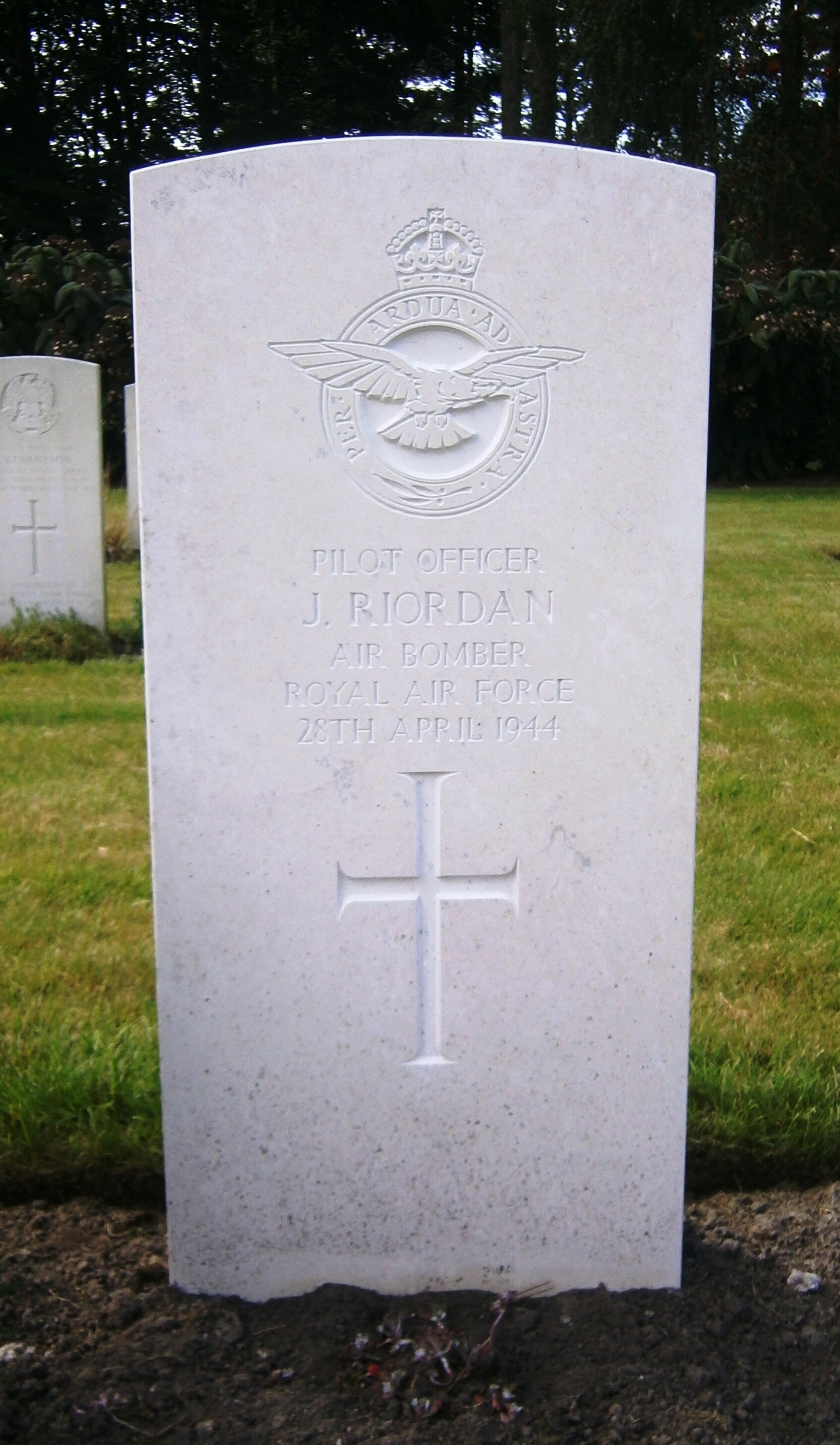
Here above Ö Riordan left and right. In the middle are brothers.
Here above Ö Riordan left and right. In the middle are brothers. John would study at university engineering was his preference. However, he was drafted into duty and was sent to Spain to fight under Franco. John ö Riordan His studies were canceled because when he returned from Spain the second world war was imminent. In Ireland he grew up on a farm in the south of the country. The farm has been in the family for 150 years, unfortunately the farm was sold at the end of 2020 because there was no more succession. We have now contacted John's great-nephew. Vicktor ö Gallaghan. During a visit to the Netherlands at the cemetery in Bergen op Zoom, he took a seed from a tree next to John's grave and took it to Ireland and planted it in his hometown in memory of his great uncle. Let's hope that tree will grow big and strong and after a suffocating period of the second world war may now bring oxygen and a bright future.
Before John Ó Riordan entered British service, he was employed by Franco's army in Spain.
Biography of John Ó Riordan (1919?/1920? – 28 April 1944)
Note: Some details regarding his early life and family come from local research sources concerning the crash of Halifax LW506. Where information has not been definitively established, this is noted.
Early life in Ireland
John Ó Riordan was born in southern Ireland and grew up on a family farm that, according to his surviving relatives, had been in the family for approximately 150 years. Within the family, he was known as an intelligent young man with an interest in engineering; he had hoped to pursue technical studies at university.
Local sources indicate that, prior to his service with the RAF, he spent some time in Spain and was involved in the conflict under Franco's regime. However, available sources provide no further details regarding his specific role or the duration of his stay there.
Joining the Royal Air Force
During the Second World War, he joined the Royal Air Force Volunteer Reserve (RAFVR). His service number was 176158. He eventually attained the rank of Pilot Officer and trained as a bomb aimer—a crucial role within Bomber Command. The bomb aimer was responsible for identifying the target and accurately releasing the bomb load.
He was posted to No. 640 Squadron RAF, a unit that flew four-engined Handley Page Halifax Mk III bombers. The squadron operated from RAF Leconfield in Yorkshire.
The final mission
On the evening of 27 April 1944, Halifax Mk III LW506 (squadron code C8-X) took off from RAF Leconfield at 23:43. The objective of the operation was to bomb the important railway yards at Montzen, Belgium. These marshalling yards served as a key German transport and supply hub.
The crew consisted of seven men:
Reginald Earnshaw (pilot)
Charles Arthur Hensey (flight engineer)
Roger John Sampson (navigator)
John Ó Riordan (bomb aimer)
William Mabon (wireless operator)
John Anthony Murphy (air gunner)
William Alfred Pullen (rear gunner)
After the attack, the Halifax set course for England. Over the Netherlands, the aircraft was intercepted by German night-fighter ace Hans-Joachim Thomeschat of 3./NJG 4, operating from Florennes, Belgium. The Halifax was shot down and crashed in the early hours of 28 April 1944 near the Postbaan road at Dinteloord, North Brabant. All seven crew members lost their lives.
Burial
The crew was buried at the Bergen op Zoom War Cemetery. John Ó Riordan is buried there in grave 13.C.12. His fellow crew members are buried in the same cemetery.
Remembrance
John Ó Riordan’s story has been preserved in the Dinteloord region thanks to local research into the crash of Halifax LW506. Contact was established with a great-nephew from Ireland, Vicktor Ó Gallaghan, who visited Bergen op Zoom to see his great-uncle's grave. According to local researchers, he took a seed from a tree near the grave and planted it in Ireland as a living memorial to his fallen relative. Significance
John Ó Riordan was one of the many young Irishmen who volunteered for service in the British armed forces, despite Ireland's neutrality during the Second World War. His life was cut short during the Allied air campaign over Europe. The crash of Halifax LW506 near Dinteloord remains a tangible reminder of the sacrifices made for the liberation of the Netherlands.
If you wish, I can also prepare a commemorative talk lasting 5 to 10 minutes about John Ó Riordan, suitable for a gathering at the memorial or at the cemetery in Bergen op Zoom.
Here is a narrative biography suitable for a commemorative book, presentation, or speech.
Flight Sergeant William Mabon
A young man from Newcastle who flew his final mission over Dinteloord
When war gripped Europe, William Mabon was a young man from Newcastle upon Tyne, an industrial city in Northeast England. Born in 1921 to William and Mary Mabon, he grew up amidst the shipyards, coal mines, and the bustling activity of a city with generations-old ties to the sea and industry.
Little remains on record regarding his early life. However, like so many young men of his generation, his life was shaped by the events that would transform Europe from 1939 onwards. When Great Britain went to war with Nazi Germany, William enlisted in the air force. He joined the Royal Air Force Volunteer Reserve and was assigned service number 1496442.
Within the RAF, he trained as a wireless operator and attained the rank of Flight Sergeant—a role carrying significant responsibility. During long night-time bombing raids, he had to maintain constant radio contact, send and receive navigational messages, and establish links with other aircraft or base headquarters in emergencies. His work was vital to the safety of the crew.
Eventually, William was posted to No. 640 Squadron RAF, a Bomber Command unit flying heavy, four-engined Handley Page Halifax bombers from RAF Leconfield in Yorkshire. There, he formed a close-knit crew with six other young men. Among them were the Irish bomb aimer John Ó Riordan, navigator Roger John Sampson, and pilot Reginald Earnshaw. Their lives would become inextricably linked.
In the spring of 1944, the Allies were making final preparations for the invasion of Western Europe. Bomber Command carried out raids almost every night against railways, marshalling yards, and logistical hubs used by the German occupying forces. One of these targets was the important railway complex at Montzen in Belgium.
On the evening of April 27, 1944, William and his crew were ordered to take part in this operation. At 11:43 PM, their Halifax Mk III—serial number LW506 and squadron code C8-X—took off from Leconfield. To the young crew, it seemed like a mission much like any other. No one could have known that this would be their final flight.
After the bombing run, the crew set a course back to England. While flying over the Netherlands, they were intercepted by a German night fighter. The Halifax was hit and crashed in the early hours of April 28, 1944, near the Postbaan in the vicinity of Dinteloord, approximately six kilometers northeast of Steenbergen. None of the seven crew members survived the crash.
For William Mabon, the war came to an end at the age of just twenty-two. A future that had barely begun was abruptly cut short over West Brabant. Far from his hometown of Newcastle, he lost his life alongside his comrades.
Today, he rests at the Bergen-op-Zoom War Cemetery. He is buried there in collective grave 13.C.7-10, alongside members of the same crew. Their graves serve as a tangible reminder of the price paid by young men from England, Ireland, Australia, and other parts of the Commonwealth for the liberation of Europe.
More than eighty years later, his name is still remembered in Dinteloord, Steenbergen, and Bergen op Zoom. In this way, the memory lives on of a young wireless operator from Newcastle who did his duty, remained loyal to his crew, and ultimately gave his life in the fight for freedom.
"His flight ended over Brabant, but his memory endured."
Sergeant William Alfred Pullen
The boy from Bermondsey who made his final flight over Dinteloord
When William Alfred Pullen was born in 1919 in Bermondsey—a working-class district in South London—no one could have foreseen that his life would end in a field in West Brabant. He grew up as the son of Sidney and Alice Pullen during a time when London was still recovering from the First World War and the economic hardships of the 1920s and 1930s.
Young William belonged to a generation that came of age as Europe once again drifted toward war. Little is recorded about his youth, but it is known that he eventually enlisted in the Royal Air Force Volunteer Reserve. Assigned service number 924992, he trained as an air gunner.
For many young men, the air force offered a chance to play an active role in the fight against Nazi Germany. For William, it meant training for one of the most dangerous roles in Bomber Command: tail gunner on a heavy bomber. From a small glass turret at the rear of the aircraft, he kept watch over the skies during night missions. His task was to spot enemy night fighters before they could attack; the tail gunner was often the first to see danger looming out of the darkness.
After completing his training, William was posted to No. 640 Squadron RAF. Based at RAF Leconfield in Yorkshire, the squadron flew the heavy, four-engined Handley Page Halifax Mk III. There, he became part of a regular aircrew. As was standard practice in Bomber Command, seven men from diverse regions and backgrounds were brought together in a single aircraft. Over time, they became more than just colleagues. After all, their survival depended entirely on one another.
His crew consisted of:
Reginald Earnshaw, pilot
Charles Arthur Hensey, flight engineer
Roger John Sampson, navigator
John Ó Riordan, bomb aimer
William Mabon, wireless operator
John Anthony Murphy, air gunner (from Australia)
William Alfred Pullen, rear gunner
In April 1944, the Allies were making final preparations for the invasion of Europe. Bomber Command carried out attacks almost every night on railways, bridges, and transport hubs vital to the German war machine. One of these targets was the railway complex at Montzen in Belgium.
On the evening of 27 April 1944, William boarded Halifax LW506—squadron code C8-X—for what would be his final flight. The aircraft took off from Leconfield at 23:43. Below them, the lights of Yorkshire faded from view as the plane set course for mainland Europe.
The attack on Montzen was carried out, followed by the long return journey to England. The crew was likely thinking of the familiar runway that would bring them home. But another danger lurked over the Netherlands: German night fighters were patrolling the routes taken by the returning Allied bombers.
In the early hours of 28 April 1944, Halifax LW506 was attacked by German night-fighter pilot Hans-Joachim Thomeschat of 3./NJG 4. The aircraft was hit hard. As the rear gunner, William was positioned exactly where such attacks often became apparent first. We will never know exactly what transpired in those final seconds. What is certain is that the Halifax was shot down and crashed near the Postbaan, in the vicinity of Dinteloord. None of the seven crew members survived.
For William Alfred Pullen, the war ended there, at the age of twenty-four. Far from London, far from his parents, and far from his native soil.
His remains were recovered and buried at the Bergen op Zoom War Cemetery. He still rests there alongside his comrades from Halifax LW506. His parents chose a simple yet moving inscription for his headstone:
"To our dear son who is ever in our thoughts."
Those words put a human face on history. Behind every service number, behind every name on a memorial, there was a family that lost a son. To the residents of Dinteloord, William is one of the seven airmen who lost their lives over the polders of West Brabant. To his parents, he remained their son from Bermondsey who never came home.
More than eighty years later, his name is still spoken at commemorations. In this way, the memory of William Alfred Pullen lives on—not merely as the tail gunner of a Halifax, but as a young man who sacrificed his future in the fight for Europe's freedom.
Sergeant Charles Arthur Hensey
The man who kept the Halifax airborne
Of the seven crew members of Halifax LW506, perhaps the least information has survived regarding Charles Arthur Hensey. There are no known photographs or personal letters, and hardly any details about his early life. Yet, his role on board reveals much about who he was and the responsibility he bore.
Charles Arthur Hensey served in the Royal Air Force Volunteer Reserve under service number 1605140. He attained the rank of Sergeant and trained as a flight engineer.
During the Second World War, the role of flight engineer was crucial. Aboard the heavy, four-engined Halifax bomber, he was responsible for monitoring the engines, fuel systems, hydraulics, and technical installations. While the pilot flew the aircraft, the flight engineer constantly kept an eye on all technical readings. A minor malfunction could mean the difference between a safe return and a forced landing over enemy territory.
Consequently, Charles was not merely a mechanic but an essential member of the aircrew. On every mission, he shared the responsibility for bringing six other men home safely.
In 1944, he was posted to No. 640 Squadron RAF, stationed at RAF Leconfield in Yorkshire. There, he flew Bomber Command’s heavy Handley Page Halifax Mk III bombers. Its regular crew consisted of:
Reginald Earnshaw, pilot
Charles Arthur Hensey, flight engineer
Roger John Sampson, navigator
John Ó Riordan, bomb aimer
William Mabon, wireless operator
John Anthony Murphy, air gunner
William Alfred Pullen, rear gunner
In the final weeks leading up to D-Day, Bomber Command carried out heavy attacks on railways and transport hubs vital to the German war machine. One of these targets was the railway marshalling yard at Montzen in Belgium.
On the evening of April 27, 1944, Charles took his place aboard Halifax LW506. At 23:43, the aircraft took off from Leconfield for a raid on Montzen. As flight engineer, he was kept busy from the start of the flight monitoring the four Merlin engines and all the systems required to keep the heavy aircraft operational.
The mission was carried out, and the Halifax began its return flight to England. However, over the Netherlands, the aircraft was intercepted by German night-fighter pilot Hans-Joachim Thomeschat of 3./NJG 4. During the attack, the Halifax was shot down. In the early hours of April 28, 1944, LW506 crashed near the Postbaan road at Dinteloord. None of the seven crew members survived the crash.
That was where the life of Charles Arthur Hensey came to an end. I have been unable to verify his exact age and place of birth in the available sources. Records confirm that he served as a flight engineer with 640 Squadron and was killed in the crash of Halifax LW506 on April 28, 1944.
Following the crash, Charles and his comrades were buried at the Bergen op Zoom War Cemetery. He still rests there in collective grave 13.C.7-10, alongside several members of his crew.
Although few personal details about him have survived, one thing is certain: without men like Charles Hensey, Bomber Command’s bombers could not have flown. They were the technical specialists who kept their aircraft airborne under the most challenging conditions. More than eighty years later, his name is still remembered in Dinteloord and Bergen op Zoom as one of the seven airmen of Halifax LW506 who lost their lives for the liberation of Europe.
Pilot Officer Reginald Earnshaw
The young pilot who never abandoned his men
When we think of the crash of Halifax LW506 near Dinteloord, we often think of seven names on a memorial. Yet behind those names lay seven lives. One of them was Reginald Earnshaw, the aircraft's captain.
Unfortunately, we know little about his early life. The archives do not tell us where he grew up, what dreams he had as a boy, or who saw him off when he departed for a mission. Nevertheless, his military records reveal something about his character. He did not begin his career as an officer, but as a non-commissioned officer in the RAF. It was only after demonstrating commitment and gaining experience that he was promoted to officer rank. His appointment was officially gazetted just ten days before his final flight.
That may seem like a minor detail, but within Bomber Command, it was a sign of trust. His superiors saw in him someone capable of providing leadership, bearing responsibility, and guiding a crew safely through the war.
At RAF Leconfield in Yorkshire, Reginald was given command of a Halifax bomber. A crew of young men from various parts of the British Commonwealth gathered around him: Irish bomb-aimer John Ó Riordan, London-born gunner William Pullen, wireless operator William Mabon, flight engineer Charles Hensey, navigator Roger Sampson, and Australian gunner John Anthony Murphy.
Over the course of their missions, something likely developed that many Bomber Command veterans later described: a bond stronger than ordinary friendship. After all, their lives depended on one another every night. If the navigator made a mistake, the entire crew was in danger. If an engine failed, the flight engineer had to take action. If a German night fighter attacked, the gunners had to sound the warning. And in the midst of it all sat the pilot, responsible for six other lives.
On the evening of April 27, 1944, Reginald once again climbed into his Halifax Mk III LW506. Perhaps he felt proud that evening of his recent promotion. Perhaps he was thinking of home. Perhaps he viewed it as just another mission. We will never know.
At 11:43 PM, the aircraft took off for an attack on the railway facilities at Montzen, Belgium. The target was crucial to Allied preparations for the liberation of Europe. The mission proceeded according to plan, and the crew headed home. England lay within reach across the North Sea.
But over the Netherlands, disaster struck.
A German night fighter spotted the Halifax in the darkness. The attack came swiftly. As the crew attempted to respond, the aircraft was dealt a fatal blow. As the pilot, Reginald would have done everything in his power to keep his plane airborne and save his men. That was his duty. That was his responsibility. And that was the burden borne by every Bomber Command captain.
In the early morning of April 28, 1944, Halifax LW506 crashed near the Postbaan in Dinteloord. None of the seven men survived.
So ended the life of a young officer who, just ten days earlier, had taken a significant step forward in his career. A young man who had earned the confidence of his superiors. A pilot who led his crew right up to the very last moment. Today, Reginald Earnshaw rests alongside his comrades at the Bergen op Zoom War Cemetery. To visitors, they are names carved in stone. To history, they are casualties of war. But to their families, they were sons, brothers, and friends who never returned home.
Perhaps that is the most important memory of Reginald Earnshaw: not merely the pilot of Halifax LW506, but a young man who bore the responsibility for six other lives and who died with them in the struggle for the freedom we enjoy today.
